Pages

Showing posts with label Home Chemistry. Show all posts

Friday, 24 May 2019

Home Chemistry: Skittles, Color

Home chemistry: Skittles, Colors
Aim: To separate colors from skittles by using the chromatography.

Definition: Chromatography is a method of separating
out materials from a mixture.

Eg. blood, ink, drugs,

Materials

1. Petrie dish.
2. Water.
3. Skittle.

Process:

Step 1: Get the Petrie dish.
Step 2: Put All six skittle in the Petrie dish.
Step 3: Spread the skittles out evenly in the edge of the dish.
Step 4: Put some water inside the Petrie dish

Conclusion:

I learned in home chemistry that or how to make a water
rainbow made with only three materials which were
a Petrie dish, Water and skittles, well I could say that this
the experience was very fun and satisfying on how the skittles
color and the made the color spread it was Exciting.


Monday, 20 May 2019

Home Chemistry: Forensics, Height, Measurements/ Term 2, Week 4


THE FEET CAN MEASURE THE HEIGHT

The bones of the feet can tell a lot about a person.
What do feet reveal about a person's height? Forensic
anthropologists team up with law enforcers to help solve crimes.
Bones of the feet can reveal an interesting fact about
an individual. Let's combine math with forensics to see how.

Image result for foot to height ratio chartImage result for foot chart size


Aim: To use forensic science techniques to measure
the height of a criminal.


Material:
  1. A Long Meter ruler,
  2. Yourself or...
  3. Someone else,
Steps:
  1. Get A Long meter ruler,
  2. Rule your height, Record your findings
  3. Rule off your shoe or foot… Record your findings.
Findings:
Name
Foot  (cm)
Height (cm)
Aisa
27cm
169cm
Niko
26cm
166cm
Ryan
22cm
152cm

Divide the length of each person's foot by his/her height. then multiply it by 100.
Conclusion:

Today for home chemistry I and my group have been working
on finding the height by your foot size. It is pretty cool finding out that
there is more than one way to solve a crime. It was pretty hard but I understood
it in the end.  This has been an awesome experience and I would love to do this again.

Monday, 6 May 2019

Home Chemistry: Filtration system

Aim: To make a filtration plant using household materials.

Image result for filtration science experiment
Water Filtration Plant

What is the filtration?

Filtration is separating solids from liquids by adding a medium through which

only the liquid can pass.

Examples are:

  1. Kettle
  2. Air
  3. Pool
  4. Internet


Materials

1. Sand
2. Pebbels
3. Funnel
4. Filter paper
5. Cone
6. Container


Process - ( use verbs or doing words in each step )

Step 1

Cut the bottle with scissors so that you make a cone & filter,

Step 2

Put the top half upside down that creates a funnel inside the other half,

STEP 3

Fold the filtered paper into squares so it will make a funnel
when opened,

STEP 4

Get 1 cup of Sand & pour it into the funnel that you made with
the filtered paper,

STEP 5

Pour some Sand & Pebbles into the filter so they do not fall out
of the filter,

STEP 6

Pour the dirty water into the funnel slowly & if the water is dripping
out of the filter then you have done a good job,


Findings
I think that we did not fail and it went partly well except for
when the dirty water started to get inside the bottom half but
except that we were fine. : )  

Minutes  1. There was a ton of water pouring/dripping through
the filter for about 1.5min, it wasn’t really pouring fast but
dripping fast as well as being clean,  
                      
2. It kept dripping about 3drops per 20 seconds for 2minutes straight,
the water still kept clean sortive?   
                
3. The water drops were getting the tiniest of dirt inside the water but
they still came through the filter a little bit clean, and just a tiny
bit slower,        
           
4. it wasn’t really dripping or started to slow down within 4minutes,
but we tried to carry it on so it would keep going so it did but
not so much it didn’t work it just carried on a little bit because we poured
a little bit because we weren't allowed,

5. It was about to stop halfway during 5mins but we tried
to make it keep going by shaking the bottle and surprisingly
it worked but then it stopped 20seconds later...

Drops per minute: 9 Drops per minute
Watercolor: Clear
Conclusion: What we have learned today was that we had to
make the water clean and Fresh so that we learned something
and to blog about our findings, Also we had to think hard and see
what would really happen to the water,
Would it be Clean? Or would it be Dirty?


Thursday, 2 May 2019

Home Chemistry: Forensics? The White Powders

Today you will be a Forensic Chemist. 

A bag of white powder has been confiscated by airport customs.  You need to find out what white powder it is?

Aim: To learn about the makeup of different white powders.

There are a number of different white powders in our everyday life. Some of these are harmful and others are not. Test the four white powders listed to see which one has been found at the airport.

You will be given a small amount of 4 white powders on your cardboard. On the black cardboard using a magnifying glass look at the powders.
Look at them under your magnifying glass and record what you see. 

These are the four powders we will be using. 

1.  Cornflour
2.  Baking Soda
3.  Salt
4.  Sugar 

Before you add the iodine, vinegar or water you will need to divide each powder into 3.

Materials

1.  Pipette
2.  Paper/cardboard
3.  Iodine

Steps

1. Fold the piece of cardboard/paper into 4.
2. Write 4 Chemicals on the 4 folded squares. 
3. Put 4  Chemicals on 4 folded squares and split them into 3.
4. 3 drops of Iodine/Water/Vinegar into a third of each chemical


Findings:


Sugar
Salt
Baking Soda
Cornflour
Appearance
A light whiteHarder whiteWhite Soft 
Texture
Hard, Soft? WetishHard, Soft?HardSmoothish
Smell
SweetSaltySmootheDusty
Iodine
Darker orange color Turned darker and wetmade it turn orange as wellMade a dark purple and tiny bit of pink.
Water
Silky whiteSilky water WetSlim, wet
Vinegar
White WetwetFixed upRolled of could not get wet.

Conclusion: Today I learned about what happens to the four powders when the powders have interfered with the chemicals, Water, Vinegar & Iodine. and how to tell is one powder is the other for ( Example: Laying out powder and then putting a liquid like Iodine, Vinegar or water on it one by one and seeing what the outcome is, and then see what type of powder it is that will change differently, This is basically what we did for experimenting on white powders, We tried to tell what powder was which, How exactly? with some liquids...   

Friday, 5 April 2019

Home chemistry, Science

Home Chemistry: Introduction

Aim: To learn the names of 10 household

chemicals and identify if they are a solid, liquid or a gas.


Equipment:

1. Soap/Detergent Dish

2. Lemon juice

3. Salt

4. Vinegar

5. Sugar

6. Milk

7. Onion

8. Lemonade

9. Bleach

10. Baking Soda


Task 1: Put the 10 chemicals

in a chart with the titles - Name, Chemical ingredient(s), Image, Solid/Liquid/Gas


Conclusion: This was a great experience
Trying to find all of the Chems/Ingredient(s), I have
Learned a lot so far & trying to learn more throughout my
Sessions in science.

Name
Chem/Ingredient
(s),
Image
Liquid/Solid/Gas
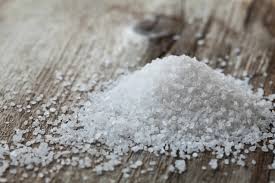
Salt
Sodium chloride/
NaCl
Image result for salt
Solid
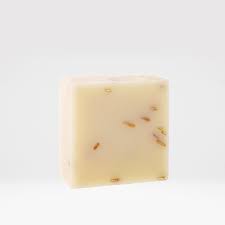
Soup
sodium or potassium/
C₁₇H₃₅COONa
Image result for soap
Solid
Milk
Calcium hydroxide/
Mg(OH)2
Liquid
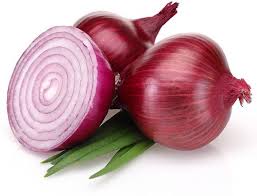
Onion
sulfenic acid/
C3H6OS
Image result for onion
Gas
Vinegar
Acetic acid/
CH3COOH
Liquid
Sugar
Fructose, galactose, and glucose/
C12H22O11
Image result for sugar
Solid
Lemon
Citric acid
C6H8O7
Image result for Lemon
Liquid
Bleach
Sodium hypochlorite/
NaCIO
Liquid
Baking soda
Sodium bicarbonate/
NaHCO3
Solid
Lemonade
citric acid/
C6H8O7
Liquid